> a peanut shortage prompted Delta, then America’s fourth-largest airline, to seek an alternative onboard snack
I never knew this was the reason. I had assumed that airlines stopped serving peanuts as an accomodation to the increasing number of people with peanut allergies.
It's both. That's why Southwest stopped, for instance. Literally just opening a small bag of peanuts around people who aren't eating peanuts is enough to bring someone with a severe allergy into anaphylactic shock.
The American Academy of Allergy Asthma and Immunology disagrees, which I'm surprised by and totally thought they could too. Someone linked to this in another thread.
> What can occur is that the patient smells an allergen, and that smell triggers a strong memory of a past reaction or the fear of having a reaction and signs and symptoms of panic may occur – including an increase in heart rate, tight breathing, flushing of the skin and nervousness, all of which could be mistaken as signs and symptoms of anaphylaxis. ... While smells can linger in the air, the allergen proteins do not, which is why smelling a food will not trigger anaphylaxis.
Interestingly some allergens like those in shellfish /can/ aerosolize in a boiling pot, however according to them peanuts cannot. I can still absolutely see airlines reacting to passengers thinking they're having attacks and eliminating peanut snacks out of caution and to avoid the issues even an imagined attack can cause on a flight. That and the risk of surface contamination probably?
Thank you, I always found that story hard to believe, despite flight attendants confidently repeating it on PA. My most bizarre experience was when they one time announced a "very, very special guest among us today", which turned out to be somebody "so allergic to peanuts, if anybody anywhere on the plane opens any food containing peanuts, they will go into anaphylactic shock IMMEDIATELY, so please don't"...
Dust can also be an issue. It's definitely a cause of concern for pistachios, where cracking the shells releases enough pistachio dust to cause skin rash to my allergic daughter, even though she's never touched a pistachio in her life. Cracking shelled peanuts can likely cause the same issue, I'd wager.
Although peanuts served in planes are not in the shell, I can imagine how having potentially allergic people in close contact to people potentially oblivious to allergy issues eating peanuts sitting right next to them and eating peanuts could be problematic.
Even though I know this, smelling peanuts (especially peanut butter) makes me intensely uncomfortable and I'm happy they're not served on most flights anymore. I'm not trying to ban anyone from taking their own peanuts on the flight (although I wish they wouldn't) but not needing to worry about it coming from the airline is a huge load off my mind.
Also, thinking as the airline, I'd do anything possible to avoid causing anaphylaxis on a flight, starting by simply removing common allergens from the menu. In the modern world, pretty much the only times an anaphylaxis attack would actually threaten my life would be camping in the wilderness and on a flight. Anaphylaxis has a great survival rate if you have an epipen and can get to a hospital quickly, and if you can't it's all down to how bad your allergy is and what meds you have available. Maybe I'm stupid but I don't bring on a flight the steroids that I'd bring camping, and I doubt the airplane has a supply either.
This explains a lot. I always wondered why airlines eliminated peanuts but never ask passengers to avoid eating peanut products they'd brought on themselves, and why peanut based foods can be so common in public if there are "airborne peanut allergies".
I have been on several flights in the last couple of years where the flight attendants have asked that no one open/consume peanuts or peanut snacks while on board due to a passenger with a severe allergy.
All considering for the person affected (and my desire to not end up at an alternate airport for hours/overnight) has always seemed like an easy thing to do.
Well, according to the AAAAI, "airborne peanut allergens" are not actually a thing.
I'm all for consideration for others, especially when crammed into a tight space for hours on end, but once we get into the realm of purely psychological effects, where do we draw the line? For example, there are people that are absolutely convinced that my phone's electromagnetic radiation will cause them discomfort, yet in-flight Wi-Fi is a thing.
To be clear, I'm totally on board with limiting common allergens in airplane food, but please let me eat my own peanuts in peace instead of further facilitating mass hysteria.
Yes, the panic attack thing is pretty real. Know someone that had a severe allergic reaction, basically started choking to death, paramedics involved, all that. The experience imprinted itself deeply, such that she's deathly afraid of it happening again, and gets triggered with panic attacks. She's like two years on from the experience and through a lot of work she's much better, but it's pretty crazy how broadly it has impacted her life as an anxiety disorder. She knows it's not logical, but describes it as a fear of death and of a spiraling nature such that if she can't arrest it in the moment it compounds very badly, which reinforces the phenomenon - panicking about panicking. Anxiety over a panic reaction. So to be clear, it's not an allergic reaction she's experiencing but trauma from one in the past.
When I told my doctor about my oldest having a reaction to a chocolate bar with peanuts, one of his first questions was "did he react before he knew it had peanuts?"
He's pretty anxious about food in general, so it actually made a lot of sense.
It's not logically thought out, emotion is a parallel decision making process to logical thought. It may be that in some circumstances, fear is a logical outcome of a stimulus, but that's not the same thing.
Second having brain damage and being incapable of processing emotion, doesn't mean that the rest of the brain hasn't been affected. In other words, a brain with an inability to process emotion, may also have an inability to process logical thought outcomes unrelated to the loss of emotional processing.
But look... the brain is complex. It's not some sort of pre-planned construct, as I'm sure you know it's an evolved organ, layered, complex. For example, memory imprint seems to be heavily impacted by emotion. Note that I'm not saying "only formed by", but impacted.
It's why you get PTSD, and it makes sense. Think mouse set upon by cat, the mouse naturally was exceptionally fearful, panicking, adrenaline, and it's very important that the mouse associates any reference to 'cat' with 'fear' and 'apprehension'. So the concept that emotion can fix survival important memories into memory, is seemingly a sensible one.
Yet for all of this, we can lay down knowledge and retain it without a cat standing over our shoulder. Realistically, we have multiple decision making processes, and ways to store memory, and so on, running in parallel.
Parallel also doesn't mean, by the way, that one cannot be affected by the other. You can use one decision making process to affect another. You can quell emotional response with reason, and emotional response can quell logical thought. Again, complex.
Effectively, what I'm saying here is that this is a complex topic. And that I'm sticking with my rendition, whilst explaining that 'parallel' doesn't imply 'isolated'.
By the way, fun 30 minute dive into that book/author/articles, thanks for the link.
To me it seems like if they logically know the smell can not cause harm having a strong emotional fear reaction is illogical. Of course most emotions are so that's not meant to be a blame or anything...
Yes. In fact, last time I checked (4 years ago), no one has ever had a reaction from (for example) kissing someone who just ate peanut butter too, which for a while everyone claimed could case a reaction. There was a reported case 12+ years ago in Montreal, but it was soon retracted as a mistake.
Yeah that's definitely the issue with the shellfish. I'm just more surprised the allergen is sufficiently different from the smell that they are disconnected in peanuts.
I also suspect there's not much reason to boil peanuts in water outside of the very specific (and delicious) snack called boiled peanuts. I can't really think of any other dish that uses them as a normal ingredient. Most of the time you'd toast them in oil for dishes or use peanut oil afaik.
I ended up in the hospital after walking by my roommate who was washing off a knife with peanut butter on it in hot water in the sink. I just inhaled a single breath of steam and in minutes I couldn't breathe!
Molecules responsible for smells tend to be small, on the order of 100-300 Daltons—otherwise they aren’t able to diffuse easily in the air.
The vast majority of allergens, on the other hand, are proteins, with the very smallest proteins being on the order of 1 kiloDalton. Large proteins get up into hundreds to thousands of kDa.
> I can still absolutely see airlines reacting to passengers thinking ...
That, plus a dozen other scenarios which airlines do not want paying out in their airplanes. Or even post-flight, if some lawyer wanted to argue that the fatal peanut fell into mommy's purse during her flight back home to her family.
I took a flight inside Mexico (Mexico City to Oaxaca) recently and the in-flight service snack was bagged peanuts. I was so amused, it was almost shocking to see. And, good news, no one died, but I assume if it was on a plane in US there probably would've been a strong emotional reaction by at least one person. It's good to know that the "Airborne anaphylaxis" is not a thing.
She visited a friend's house and started getting an itchy throat immediately. Friends knew of her allergy and obviously hadn't prepared any.
Turned out the dog food had peas in it and the bag was open on the other end of the house in the kitchen. (And a supporting role from whatever the dog had slobbered on in the living room)
Sometimes it blows me away how sensitive our bodies can be.
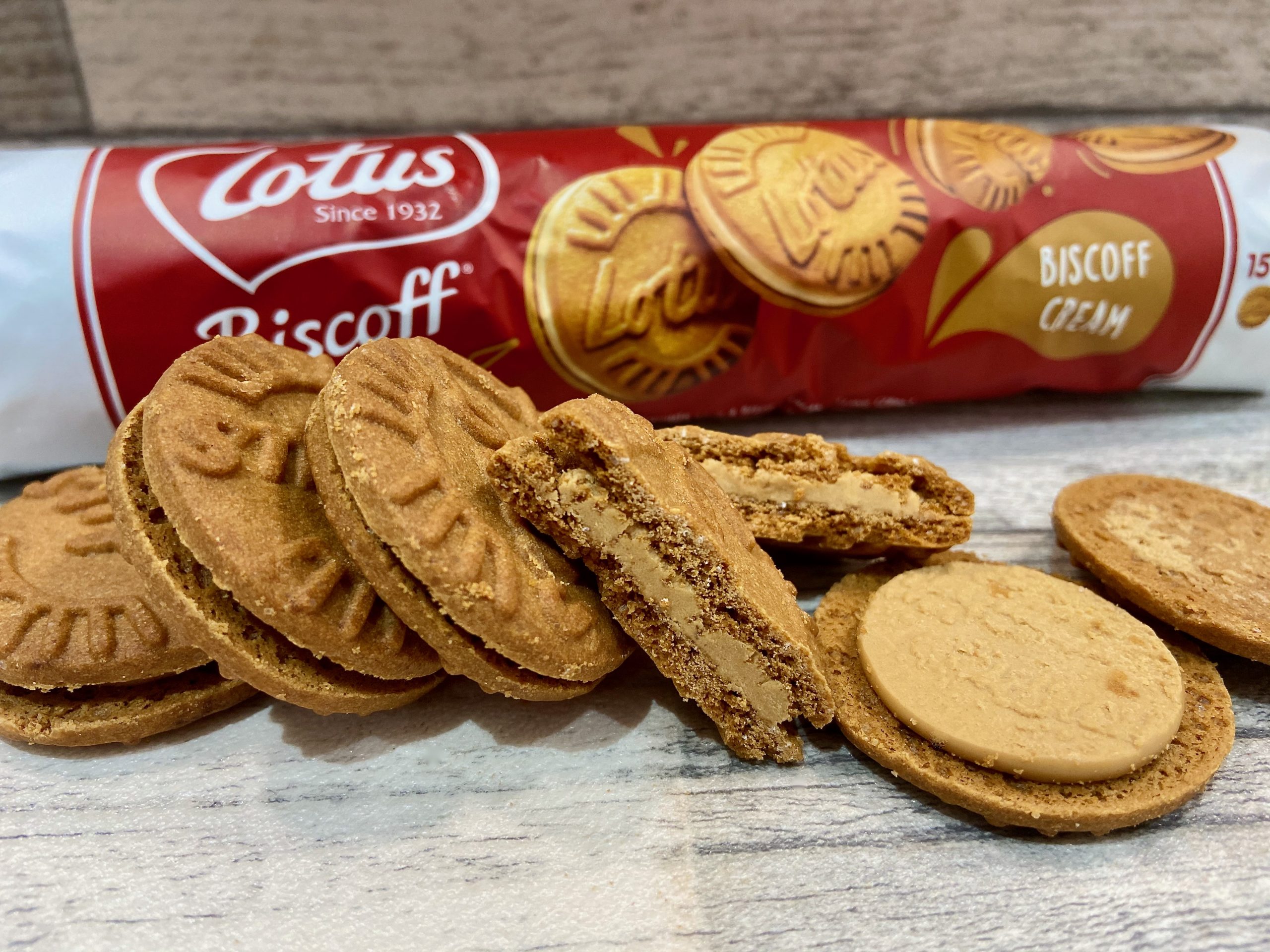
Yea, I once brought some to game night, and another gamer brought actual Biscoff cookies. Then a third person put them together into a sandwich cookie which I thought was equal parts funny and violating some kind of Kosher rule "Do not seethe a kid in it's mother's milk" I invented in my head.
We’ve strayed further. Sometimes we take the meat of a chicken, bathe it in its eggs, dip it in bread crumb, and shape it in the form of its ancestors.
Just had that when visiting japan, wanted to order food to the hotel using Uber Eats, and everything’s in Japanese. So I translated it. Seeing parent and child bowl made it an immediate buy!
This has been a Belgian children's breakfast staple for generations. Some dunk them in milk before putting them on bread. Those with a more sophisticated palate might use coffee or hot chocolate instead.
It is indeed excellent; I think it goes well with a bit of whisky in the cheesecake. I also sometimes put a swirl of Biscoff spread through the cheesecake
As a French, I've been eating speculoos like a few times per year, usually with coffee at some friends' who like them. And I never realized it was written with 2 o and I was thinking it was from Spain. Now I've learned something
I'd read that there are a few snack items resistant to GLP-1 induced food aversions, when I was on a GLP-1, Biscoff cookies felt like one of them. I may have an Amazon scheduled delivery of Biscoff, which every month, I intend to cancel, and somehow forget to follow through.
I'm not on GLP-1s, but I am on metformin [1] which my wife says has similar food aversion properties to the GLPs, and for me I've noticed virtually anything with peanut butter I can still eat a nearly infinite quantity of. One of the worst things that has ever happened to me was finding out that peanut butter fudge is ridiculously easy to make.
[1] Off label for weight loss. My insurance wouldn't cover GLP-1s, and metformin is out of patent and super cheap, and I read that at least some people have had good success using it for weight loss. I am fortunately one of those happy few.
When we say food 'aversion', we're implying that a drug like metformin makes you not want that thing, yes?
I've found when I take metformin, and then eat food later, I enjoy the food so much more as a craving/satiation thing. Especially steaks. But I'm not quite sure why that is. I can't say that what peers have told me about metformin is to help with weight loss, but supposedly the benefits/effects on the body are generally positive.
In my case metformin makes it so I just have no appetite, and certain foods are outright kind of revolting to me now. I can't do fried chicken while I'm on it.
I'm sorry that happens, though now I'll be curious to be on the lookout for this when I take it.
Out of curiosity, does that effect subside fairly quickly e.g. once the drug half life and has exited your system, do you crave/can you eat chicken fairly comfortably?
One extreme option if you wanna kick the ‘butter — I ate a small amount of peanut butter immediately before a severe case of norovirus kicked in (48 hours of purge every 15-20 minutes) — can’t even be in the same room with the stuff without flashbacks anymore. Even typing that out made feel rough.
Maybe there’s some way to de-program such strong associations but seems like a way to kick a bad habit..
I have the same reaction to strawberry ice cream. Not actual strawberries, those are still good, but the flavor that candy companies think strawberries taste like.
I got very sick fairly shortly after eating a bunch of strawberry ice cream when I was a kid. 25 years later and I still can't stand the stuff.
... That would explain a lot. I'm in Norway, and I had never heard of these biscuits until recently. Now they're absolutely everywhere. It's maybe not surprising that the US fast food chains push them, but the Swedish chains do too? And they put it in chocolate bars?
Like most countries I'd wager, we have plenty of own local biscuit brands you've never heard of. Biscoff does not stand out from them as fundamentally different in either texture or taste. I just couldn't wrap my mind around why this bland brand was suddenly pushed so heavily everywhere.
But if food executives think it's GLP resistant (whether it is or not) then it makes a lot of sense. Jesus. People should worry less about "hyperprocessed food" and more about things like this (alternatively, this sort of thing is one of the hyperprocessed foods people should actually worry about).
The first 10+ times I saw these they were airplane freebies. Since I often get motion sick in planes and everything tastes worse at altitude anyway, I kind of developed an aversion to them, and was a bit puzzled to discover people voluntary buy them to eat on the ground.
Biscoff is a registered trademark of Lotus Bakeries, while speculoos is a generic name. Hence why Lotus markets its under its owned name, and not the generic name; especially outside Belgium/Netherlands where people don't know about speculoos.
But to be honest, as a Belgian living abroad, I'm just happy I can find it at all lol. Was surprised to even find the 'crunchy' spread in my local supermarket.
As a Belgian living abroad I'm waiting for the day prepare/filet americain, proper mayonaise and "broodjes" are available world wide. If people knew about it, it would be as big as sushi!
During the heights of COVID, the bargain store by me had boxes of trays of American Airlines' Biscoff. They were clearly optimized for weight: packaged in a super lightweight plastic tray with shrink wrap so thin it already had holes in it.
They apparently had enough getting stale to offload them to a liquidator.
Once in a while we pick up a pack of these from Costco, when we haven't flown in a while. They're pretty sweet, so we don't get them too often, but once in a while as a treat.
One of my sons is allergic to peanuts (and a lot more, like dairy alas) ... but Biscoff is a saviour for a little treat! And Biscoff spread is glorious, better than peanut butter IMO
Biscoff spread is a nice treat but peanut butter is much higher in protein, lower in carbs, and is mostly unsaturated fats compared to Biscoff spread which is mostly saturated fats.
Compared to natural peanut butter anyways. Compared to something like Jif though, that difference is probably minimal.
Even sweetened peanut butter like Jif is pretty healthy. It's something like 90% peanut butter, 9% sugar, and 1% other oils. Total composition is like 50% fat, 20% protein, 10% fiber, and 10% sugar.
Biscoff spread is more like 40% fat, 35% sugar, and 20% other carbs. No protein or fiber.
>Myth: Smelling an allergen can trigger anaphylaxis.
>Fact: While people often don’t like the smell of a food they’re allergic to, smell does not provoke an allergic reaction...While smells can linger in the air, the allergen proteins do not, which is why smelling a food will not trigger anaphylaxis.
>Allergic reactions to airborne peanut proteins are rare and cannot be predicted by high levels of IgE-antibodies to peanut or Ara h 2. Only small amounts of biologically active peanut proteins were detected in the air and seem unlikely to trigger moderate/severe allergic reactions.
Is that risk really any different from anywhere else in society? Yes, if you have a truly severe peanut allergy, you may have to wipe down every surface you touch. Being on an airplane vs. anywhere else doesn't change that.
I have severe peanut allergy. If I have any exposure, my immune system stays hypersensitised for several weeks. During that period, even the smell of peanuts is enough for my throat to start swelling up. It won't develop into the full anaphylactic reaction but it is certainly bad enough to make me very unhappy.
It's not physically possible for the smell of peanuts to cause any kind of allergic reaction, as explained by the link above. That doesn't mean that the feeling you're getting isn't real, but it's caused by the (rightful) fear that you have about peanuts.
They're also very chocolate-deficient and therefore not worth my time. Life is too short for anything vanilla, shortbread, or sugar cookie adjacent (which I recall Biscoff to be).
I understand that this is a blazing hot culinary take and might be the most controversial thing I've written on HN. Before downvoting please consider that this isn't elitism or opinion - everybody the world over deserves the joy of flavor in their confections instead of cloying bland sweetness. Embrace variety and live your life. Throw your Biscoff in the trash and buy some Tim Tams or Thin Mints.
Came here to say this. I thought I liked them when I was given just one packet on the airplane. So I bought them at Costco when I saw them there. It's been like two months since I bought it and I barely finished a third of that because it's too sweet.
I first ran into speculoos in the south of France where they ground up and in all sorts of things, especially cheesecake crust. All of a sudden I saw "speculoos" every where. How it jumped from Belgium to Nice escapes me.
The "then passengers fell in love" portion was enough context (for me, at least) to know we were about to read about Delta Airlines, the first place I've had Biscoff cookies, and other than when I get them at Costco, the only place I eat them.
Turns out just anyone can call themselves a nutritionist, according to Dr Ben Goldacre, but "dietician" is something you actually have to be qualified for.
So, you can call yourself a nutritionist, run a blog about it, write a book about it, anything really, and tell anyone any kind of bullshit you make up.
I think I'm on pretty solid ground with mine though.
> I have been known to inhale entire costco sized sleeves of biscoffs
> I don't look at the nutrition facts
Here's the title:
"What You're Eating Is Probably Pretty Much Fine"
The strapline is "maybe just not so much, and don't do it all the time"
Me too. Have you seen that Kodiak is now making "cookie butter" protein granola? Cookie butter is the US naming of speculoos and they're amazing. Love that stuff. Tried making my own to improve the macros more, but haven't nailed it yet.
Or hot tea. Along the same lines too, try the ultra-flat and crisp and dunkable Moravian cookies (specifically the spice or ginger flavors) or ginger-flavored Swedish thins.
And now with their popularity, they're almost everywhere now. Mcdonald's, Krispy Kreme, Cinnabon, Auntie Anne's have all had Biscoff partnered products.
Kind of cool to the explosion of popularity and them taking advantage and partnering with other brands to expand their markets.
I find this odd since to me Delta is the airline of last resort, to the point I've never even flown on them (either no routes, or more $$$ than the alternatives).
Oh no, it's been years. At least the last 10 or so. They usually have either cookies or pretzels, but usually both and if you ask nicely they'll give you the cookies. Two if you look emaciated.
Honestly that's one of the few things I look forward to when flying these days, and a serious consideration on picking Delta if other factors are equal between airlines.
Tomato juice is also disproportionately popular during flights compared to what one would normally order grounded. You can also buy tomato v8 juice from a shop, but there’s a reason taste changes when you’re flying, which they explain in the article.
I do, sometimes.
But when I can always get them it's less of a "treat".
There are a few things I only get intentionally when traveling for work so it's something to look forward to and brings something positive to the trip.
Sure, there are a lot of things like this you can do. It would eat up a minute of your time and cost a premium to buy a tiny packet of an individually-wrapped biscoff. Or you could spend ~$36 to buy a box of 300 biscoffs that occupy a space in your cupboard, and then every time you fly, you take one out of the box and put it in your carry-on, and resist the temptation to eat it unless you are 10km high.
Keep the box, set a chair in the middle of the living room, strap on a VR headset (viewer’s choice) and put on an airline passenger POV video from YouTube. Crunch away at your Biscoff.
You’re welcome. You just saved thousands of dollars.
In Hong Kong I've seen a gourmet cheesecake shop selling "Lotus Biscoff" flavored cheesecake, and supermarkets selling Biscoff butter (basically Nutella, but with Biscoff flavoring instead of chocolate).
I know the cookie mainly for being sold at Costco. I had no idea they were given out on flights.
The biggest question I've always had about them was whether the "Lotus" in their name is the same brand as the Chinese supermarket chain Lotus. I think it isn't?
it isn't. It's a really old Belgian company that kind of was slowly there for 80 years being fine dozing off and selling their cookies on the local market. And suddenly an invention show on the local television where a finalist invented biscoff spread woke them up to innovation and it seems that in 10 years they conquered the world.
>"But until 1986, when Delta Air Lines began serving them as a temporary replacement for peanuts, the cookie—typically something enjoyed with a cup of coffee in a Belgian café—was practically unknown in the US. Today, Biscoff is a global phenomenon, with its manufacturer Lotus Bakeries touting it as the world’s fifth-bestselling cookie."
How do you make your unknown product known?
You put it in front of as many people as you can!
In the above case, cookies in front of airline-passengers seemed to be the winning business formula, but this is only one example of a product meeting a market at a specific interface/connection point, with the Delta customers' drop-down in-flight tray tables being that "connection point".
In the study of business, this is one example (or subcase) of that much broader pattern...
Pardon? You mean the traditional Belgian, Dutch, French, and German cookie? Because it's a cross-border (food) cultural good, it's not something invented by, or to this day cherished in, one specific country.
They were (and are) a huge mistake. Not everyone knows that these Biscoff cookies contain cinnamon! A large number of people dislike cinnamon, and most sources of it contain heavy metals. There's also some early research to show that it causes cancer, although the quantities in one cookie are likely not going to hurt you as much as the radiation from the plane you're on.
Hope they get rid of these, it's always a hard pass for me, and I've seen so many others just skip or bin them after one bit.
Aren't they supposed to be full of sugar? Each time I've been tempted to pick them up when shopping, one look at the ingredients and nutritional profile is enough to dissuade me. I guess trying them once in a while won't kill me, though.
Apparently, they are a brand of speculoos cookies, and this Wikipedia synopsis is eye opening:
> speculaas [speːkyˈlaːs] ⓘ refers to the more traditional variant, made with a mix of various spices, which is nowadays most popular in the Netherlands; speculoos [speːkyˈloːs] ⓘ refers to a Belgian variant that omits the traditional spices in favour of caramelized sugar for flavour, and which is nowadays the most common variant in Belgium and worldwide
So the Belgians enshittified speculaas to create speculoos, pumping it full of sugar, and presented it to the world as something special.
Yes, cookies are not the most healthy thing, but there are better and worse ones. It is not just even about it containing some sugar. Why replace the spices that made a traditional cookie special, with more sugar? What is distinctive about sugar?
There is a good reason for that. Even traditional speculaas (not Lotus or other mass produced speculoos/biscoff) contains less and less speculaas spices the further you move away from Amsterdam. Because the spices arrived there, they were cheapest there. The further away (in this case south) you moved, the more expensive they were. This leads to bakers, especially commercial ones, to use less in their recipes.
> So the Belgians enshittified speculaas to create speculoos
Yes and no. This "Speculoos is actually cheap Speculaas" isn't completely true. That's what people like to say today, but the "Speculoos" name has been around much longer than Lotus bakeries. It's just a dialect thing and there is no reason.
Some people called it "Speculaas", some people called it "Speculoos", and _then_ a cheaper variant got made and they choose the "Speculoos" term for it.
It all just sounds really fitting because the "-loos" suffix in Dutch means "without".


I never knew this was the reason. I had assumed that airlines stopped serving peanuts as an accomodation to the increasing number of people with peanut allergies.